

Oh, historical fiction books. You break us emotionally, but you teach us about history while doing so, and for that, we are grateful. We don’t know what it is about the genre, but seriously, tears every time. Maybe it’s that the books are so incredibly expansive in their reach, covering moments in time from every part of history, from ones we learned about in school, to moments we’ve never even heard of.
The list that follows are some our favorite YA historical fiction books that will make you feel so many emotions! Read on and see for yourself, and we promise they’ll break you in the best way.
19 Historical Fiction Books
THAT MAKE US FEEL ALL THE FEELINGS
1. Last Night at the Telegraph Club by Malinda Lo
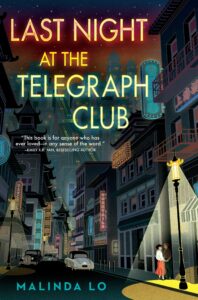
Seventeen-year-old Lily Hu can’t remember exactly when the feeling took root–that desire to look, to move closer, to touch. Whenever it started growing, it definitely bloomed the moment she and Kathleen Miller walked under the flashing neon sign of a lesbian bar called the Telegraph Club. Suddenly everything seemed possible.
But America in 1954 is not a safe place for two girls to fall in love, especially not in Chinatown. Red-Scare paranoia threatens everyone, including Chinese Americans like Lily. With deportation looming over her father–despite his hard-won citizenship–Lily and Kath risk everything to let their love see the light of day.
2. Like a Love Story by Abdi Nazemian
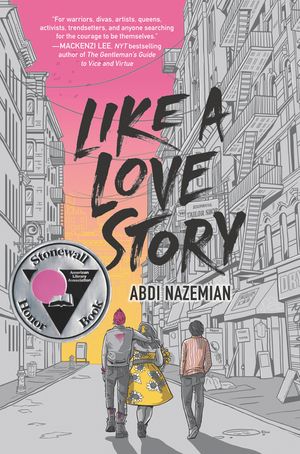 It’s 1989 in New York City, and for three teens, the world is changing.
Reza is an Iranian boy who has just moved to the city with his mother to live with his stepfather and stepbrother. He’s terrified that someone will guess the truth he can barely acknowledge about himself. Reza knows he’s gay, but all he knows of gay life are the media’s images of men dying of AIDS.
Judy is an aspiring fashion designer who worships her uncle Stephen, a gay man with AIDS who devotes his time to activism as a member of ACT UP. Judy has never imagined finding romance…until she falls for Reza and they start dating.
Art is Judy’s best friend, their school’s only out and proud teen. He’ll never be who his conservative parents want him to be, so he rebels by documenting the AIDS crisis through his photographs.
As Reza and Art grow closer, Reza struggles to find a way out of his deception that won’t break Judy’s heart—and destroy the most meaningful friendship he’s ever known.
3. Code Name Verity by Elizabeth Wein
 Oct. 11th, 1943-A British spy plane crashes in Nazi-occupied France. Its pilot and passenger are best friends. One of the girls has a chance at survival. The other has lost the game before it’s barely begun.
When “Verity” is arrested by the Gestapo, she’s sure she doesn’t stand a chance. As a secret agent captured in enemy territory, she’s living a spy’s worst nightmare. Her Nazi interrogators give her a simple choice: reveal her mission or face a grisly execution.
As she intricately weaves her confession, Verity uncovers her past, how she became friends with the pilot Maddie, and why she left Maddie in the wrecked fuselage of their plane. On each new scrap of paper, Verity battles for her life, confronting her views on courage, failure and her desperate hope to make it home. But will trading her secrets be enough to save her from the enemy?
4. The Blood Years by Elana K. Arnold
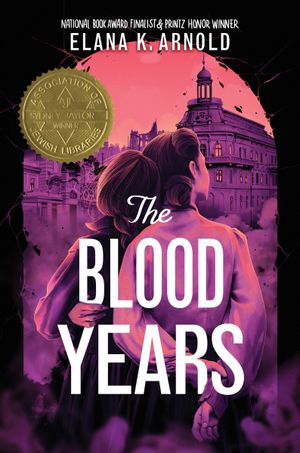 Frederieke Teitler and her older sister, Astra, live in a house, in a city, in a world divided. Their father ran out on them when Rieke was only six, leaving their mother a wreck and their grandfather as their only stable family. He’s done his best to provide for them and shield them from antisemitism, but now, seven years later, being a Jew has become increasingly dangerous, even in their beloved home of Czernowitz, long considered a safe haven for Jewish people. And when Astra falls in love and starts pulling away from her, Rieke wonders if there’s anything in her life she can count on—and, if so, if she has the power to hold on to it.
Then—war breaks out in Europe. First the Russians, then the Germans, invade Czernowitz. Almost overnight, Rieke and Astra’s world changes, and every day becomes a struggle: to keep their grandfather’s business, to keep their home, to keep their lives. Rieke has long known that she exists in a world defined by those who have power and those who do not, and as those powers close in around her, she must decide whether holding on to her life might mean letting go of everything that has ever mattered to her—and if that’s a choice she will even have the chance to make.
Based on the true experiences of her grandmother’s childhood in Holocaust-era Romania, award-winning author Elana K. Arnold weaves an unforgettable tale of love and loss in the darkest days of the twentieth century—and one young woman’s will to survive them.
5. Nothing Sung and Nothing Spoken by Nita Tyndall
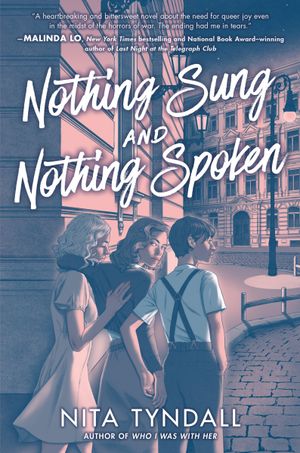
Charlotte Kraus would follow Angelika Haas anywhere. Which is how she finds herself in an underground club one Friday night the summer before World War II, dancing to contraband American jazz and swing music, suddenly feeling that anything might be possible.
Unable to resist the allure of sharing this secret with Geli, Charlie returns to the club again and again, despite the dangers of breaking the Nazi Party’s rules. Soon, terrified by the tightening vise of Hitler’s power, Charlie and the other Swingjugend are drawn to larger and larger acts of rebellion. But the war will test how much they are willing to risk—and to lose.
From the critically acclaimed author of Who I Was with Her, this beautifully told story of hope, love, and resistance will captivate readers of Girl in the Blue Coat and Last Night at the Telegraph Club.
6. The Book Thief by Marcus Zusak
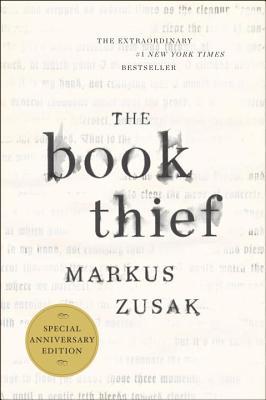 When Death has a story to tell, you listen.
It is 1939. Nazi Germany. The country is holding its breath. Death has never been busier, and will become busier still.
Liesel Meminger is a foster girl living outside of Munich, who scratches out a meager existence for herself by stealing when she encounters something she can’t resist–books. With the help of her accordion-playing foster father, she learns to read and shares her stolen books with her neighbors during bombing raids as well as with the Jewish man hidden in her basement.
In superbly crafted writing that burns with intensity, award-winning author Markus Zusak, author of I Am the Messenger, has given us one of the most enduring stories of our time.
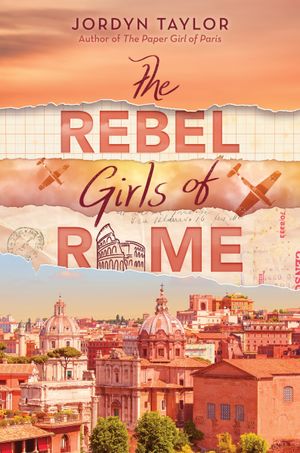
7. The Rebel Girls of Rome by Jordyn Taylor
 Now:
Now:
Grieving the loss of her mother, college student Lilah is hoping to reconnect with a grandfather who refuses to talk about his past. Then she receives a mysterious letter from a fellow student, Tommaso, claiming he’s found a lost family heirloom, and her world is upended.
Soon Lilah finds herself in Rome, trying to unlock her grandfather’s history as a Holocaust survivor once and for all. But as she and Tommaso get closer to the truth—and their relationship begins to deepen into something sweeter—Lilah realizes that some secrets may be too painful to unbury…
Then:
It’s 1943, and nineteen-year-old Bruna and her family are doing their best to survive in Rome’s Jewish quarter under Nazi occupation. Until the dreaded knock comes early one morning, and Bruna is irrevocably separated from the rest of her family.
Overcome with guilt at escaping her family’s fate in the camps, she joins the underground rebellion. When her missions bring her back to her childhood crush, Elsa, Bruna must decide how much she’s willing to risk—when fully embracing herself is her greatest act of resistance.
8. The Most Dazzling Girl in Berlin by Kip Wilson
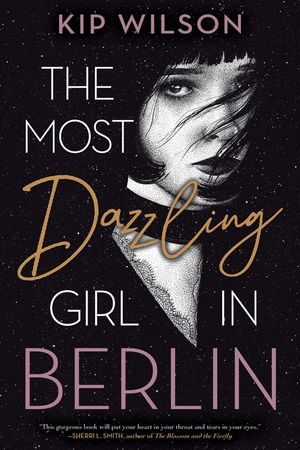
On her eighteenth birthday, Hilde leaves her orphanage in 1930s Berlin, and heads out into the world to discover her place in it. But finding a job is hard, at least until she stumbles into Café Lila, a vibrant cabaret full of expressive customers. Rosa, one of the club’s waitresses and performers, immediately takes Hilde under her wing. As the café denizens slowly embrace Hilde, and she embraces them in turn, she discovers her voice and her own blossoming feelings for Rosa.
But Berlin is in turmoil. Between the elections, protests in the streets, worsening antisemitism and anti-homosexual sentiment, and the beginning seeds of unrest in Café Lila itself, Hilde will have to decide what’s best for her future . . . and what it means to love a place on the cusp of war.
9. I Must Betray You by Ruta Sepetys
 Romania, 1989. Communist regimes are crumbling across Europe. Seventeen-year-old Cristian Florescu dreams of becoming a writer, but Romanians aren’t free to dream; they are bound by rules and force.
Amidst the tyrannical dictatorship of Nicolae Ceaușescu in a country governed by isolation and fear, Cristian is blackmailed by the secret police to become an informer. He’s left with only two choices: betray everyone and everything he loves—or use his position to creatively undermine the most notoriously evil dictator in Eastern Europe.
Cristian risks everything to unmask the truth behind the regime, give voice to fellow Romanians, and expose to the world what is happening in his country. He eagerly joins the revolution to fight for change when the time arrives. But what is the cost of freedom?
10. As Long as the Lemon Trees Grow by Zoulfa Katouh
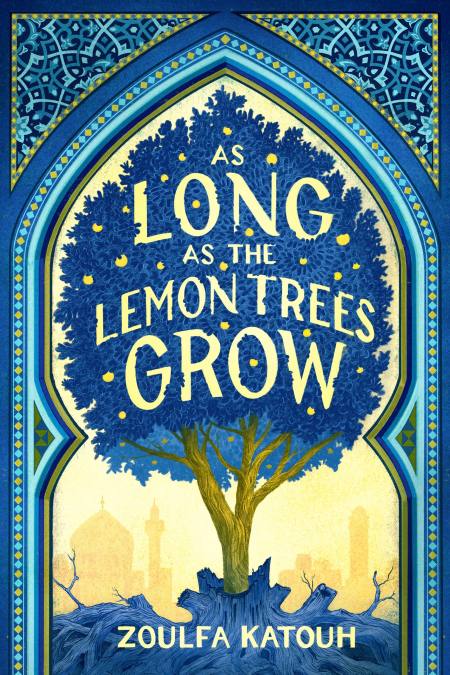 Salama Kassab was a pharmacy student when the cries for freedom broke out in Syria. She still had her parents and her big brother; she still had her home. She had a normal teenager’s life.
Now Salama volunteers at a hospital in Homs, helping the wounded who flood through the doors daily. Secretly, though, she is desperate to find a way out of her beloved country before her sister-in-law, Layla, gives birth. So desperate, that she has manifested a physical embodiment of her fear in the form of her imagined companion, Khawf, who haunts her every move in an effort to keep her safe.
But even with Khawf pressing her to leave, Salama is torn between her loyalty to her country and her conviction to survive. Salama must contend with bullets and bombs, military assaults, and her shifting sense of morality before she might finally breathe free. And when she crosses paths with the boy she was supposed to meet one fateful day, she starts to doubt her resolve in leaving home at all.
Soon, Salama must learn to see the events around her for what they truly are—not a war, but a revolution—and decide how she, too, will cry for Syria’s freedom.
11. An Emotion of Great Delight by Tahereh Mafi
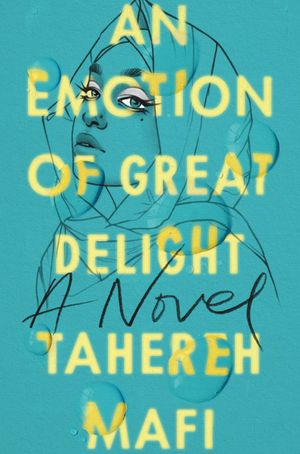 It’s 2003, several months since the US officially declared war on Iraq, and the American political world has evolved. Tensions are high, hate crimes are on the rise, FBI agents are infiltrating local mosques, and the Muslim community is harassed and targeted more than ever. Shadi, who wears hijab, keeps her head down.
She’s too busy drowning in her own troubles to find the time to deal with bigots.
Shadi is named for joy, but she’s haunted by sorrow. Her brother is dead, her father is dying, her mother is falling apart, and her best friend has mysteriously dropped out of her life. And then, of course, there’s the small matter of her hear—
It’s broken.
Shadi tries to navigate her crumbling world by soldiering through, saying nothing. She devours her own pain, each day retreating farther and farther inside herself until finally, one day, everything changes.
She explodes.
An Emotion of Great Delight is a searing look into the world of a single Muslim family in the wake of 9/11. It’s about a child of immigrants forging a blurry identity, falling in love, and finding hope—in the midst of a modern war.
12. For Lamb by Lesa Cline-Ransome
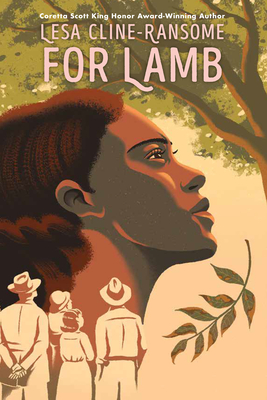 An interracial friendship between two teenaged girls goes tragically wrong in this powerful historical novel set in the Jim Crow South.
For Lamb follows a family striving to better their lives in the late 1930s Jackson, Mississippi. Lamb’s mother is a hard-working, creative seamstress who cannot reveal she is a lesbian. Lamb’s brother has a brilliant mind and has even earned a college scholarship for a black college up north– if only he could curb his impulsiveness and rebellious nature.
Lamb herself is a quiet and studious girl. She is also naive. As she tentatively accepts the friendly overtures of a white girl who loans her a book she loves, she sets a off a calamitous series of events that pulls in her mother, charming hustler uncle, estranged father, and brother, and ends in a lynching.
Told with nuance and subtlety, avoiding sensationalism and unnecessary brutality, this young adult novel from celebrated author Lesa Cline-Ransome pays homage to the female victims of white supremacy.
13. Pedro & Daniel by Federico Erebia
 Pedro and Daniel are Mexican American brothers growing up in 1970s Ohio. Their mother resents that Pedro is a spitting image of their darker-skinned father; that Daniel likes dolls; that neither boy plays sports. Both are gay and neurodivergent. They are alike, but they are dissimilar in their struggles, their dreams, their approach to life.
Pedro & Daniel is a sweeping and deeply personal novel that spans from childhood, through their teen years, and into adulthood. Theirs is a bond that won’t be broken. Together they endure an abusive home life, coming out, first loves, first jobs, and the AIDS pandemic, in a coming-of-age story unlike any other.
Despite everything, there is much joy in the stories in the book. Their resilience and special bond help the boys face one evil after another. While Pedro suffers more at home, Daniel is particularly susceptible to the malevolence of the outside world.
They are similar: gay, neurodivergent Latinos in love with all things Mexico.
Son tal para cual.
They are cut from the same cloth.
They are different: Pedro is darker-skinned, oppressed, repressed, introverted, and agnostic. Daniel is precocious, carefree, mischievous, religious, and unguarded.
Mismo perro, distinto collar.
Same dog, different collar.
14. Butterfly Yellow by Thanhhà Lai
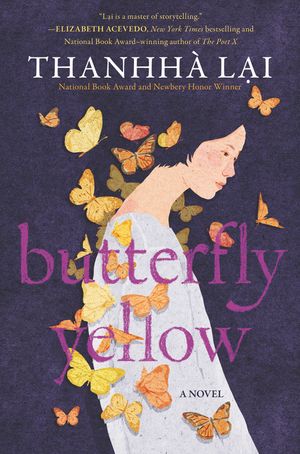 In the final days of the Việt Nam War, Hằng takes her little brother, Linh, to the airport, determined to find a way to safety in America. In a split second, Linh is ripped from her arms—and Hằng is left behind in the war-torn country.
Six years later, Hằng has made the brutal journey from Việt Nam and is now in Texas as a refugee. She doesn’t know how she will find the little brother who was taken from her until she meets LeeRoy, a city boy with big rodeo dreams, who decides to help her.
Hằng is overjoyed when she reunites with Linh. But when she realizes he doesn’t remember her, their family, or Việt Nam, her heart is crushed. Though the distance between them feels greater than ever, Hằng has come so far that she will do anything to bridge the gap.
15. Thirteen Doorways, Wolves Behind Them All by Laura Ruby
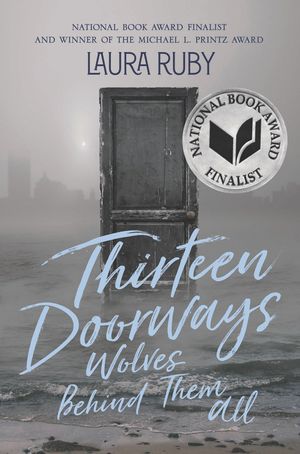 When Frankie’s mother died and her father left her and her siblings at an orphanage in Chicago, it was supposed to be only temporary—just long enough for him to get back on his feet and be able to provide for them once again. That’s why Frankie’s not prepared for the day that he arrives for his weekend visit with a new woman on his arm and out-of-state train tickets in his pocket.
Now Frankie and her sister, Toni, are abandoned alongside so many other orphans—two young, unwanted women doing everything they can to survive.
And as the embers of the Great Depression are kindled into the fires of World War II, and the shadows of injustice, poverty, and death walk the streets in broad daylight, it will be up to Frankie to find something worth holding on to in the ruins of this shattered America—every minute of every day spent wondering if the life she’s able to carve out will be enough.
I will admit I do not know the answer. But I will be watching, waiting to find out.
That’s what ghosts do.
16. One Last Shot by Kip Wilson
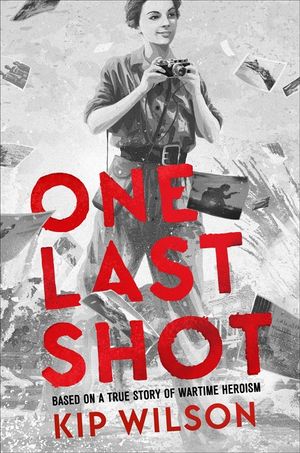 The daughter of Polish Jewish immigrants, Gerta Pohorylle doesn’t quite fit in with her German classmates. While she’s away at boarding school, however, she becomes a master at reinventing herself as a vibrant, confident young woman. When she returns from school, she joins a group of young activists and is arrested for distributing anti-Nazi propaganda. Her family decides she must leave Germany.
In Paris, Gerta meets André Friedman, a Hungarian photographer eager for fame and fortune, who fosters Gerda’s interest in photography. Together the pair reinvents their brand of photojournalism under the names Robert Capa and Gerda Taro, in part to gloss over their Jewish ancestry, and soon they’re traveling to areas of military conflict and selling their photos for high prices. Gerda continues to travel solo through Europe, often the only woman in journalism circles. Her assignments eventually lead her to Spain to cover the growing conflict that is becoming the Spanish Civil War (1936-1939), part of events leading to World War II.
True to her political beliefs, Gerda pushes closer and closer to the front line, eager to capture the lives and vibrant hopes of Spanish republican forces fighting against fascism, only to lose sight of her own safety.
17. Traitor by Amanda McCrina
 Poland, 1944. After the Soviet liberation of Lwów from Germany, the city remains a battleground between resistance fighters and insurgent armies, its loyalties torn between Poland and Ukraine.
Seventeen-year-old Tolya Korolenko is half Ukrainian, half Polish, and he joined the Soviet Red Army to keep himself alive and fed. When he not-quite-accidentally shoots his unit’s political officer in the street, he’s rescued by a squad of Ukrainian freedom fighters. They might have saved him, but Tolya doesn’t trust them. He especially doesn’t trust Solovey, the squad’s war-scarred young leader, who has plenty of secrets of his own.
Then a betrayal sends them both on the run. And in a city where loyalty comes second to self-preservation, a traitor can be an enemy or a savior—or sometimes both.
18. The Fountains of Silence by Ruta Sepetys
 Madrid, 1957. Under the fascist dictatorship of General Francisco Franco, Spain is hiding a dark secret. Meanwhile, tourists and foreign businessmen flood into Spain under the welcoming guise of sunshine and wine. Among them is eighteen-year-old Daniel Matheson, the son of a Texas oil tycoon, who arrives in Madrid with his parents hoping to connect with the country of his mother’s birth through the lens of his camera. Photography–and fate–introduce him to Ana, whose family’s interweaving obstacles reveal the lingering grasp of the Spanish Civil War–as well as chilling definitions of fortune and fear. Daniel’s photographs leave him with uncomfortable questions amidst shadows of danger. He is backed into a corner of decisions to protect those he loves. Lives and hearts collide, revealing an incredibly dark side to the sunny Spanish city.
19. Tall Water by SJ Sindu, illustrated by Dion MBD
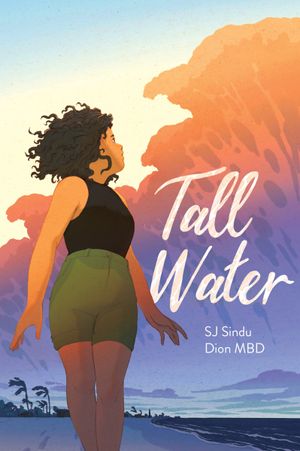
Ever since she turned sixteen, Nimmi has wanted to see her mother. Though she has a loving but overprotective father and a budding relationship, she yearns to travel to Sri Lanka to confront the mother who refused to leave the island during a war, not even for Nimmi’s sake. Her father is going back for the first time as a reporter on assignment, but he refuses to take her, deeming Sri Lanka too dangerous.
But then Nimmi’s mother appears to her in a dream, asking her to come find her, and Nimmi knows she must go. Her father is livid when he sees her at baggage claim, but by then it’s too late, and he reluctantly agrees to help Nimmi make contact with her mother. In Sri Lanka, Nimmi tags along with her father and his guide, past checkpoints and armed soldiers and increasing hints of the war that rages there.
However, the day after Christmas, disaster strikes and a tsunami ravages the island. Stranded amid the devastation and destruction, can Nimmi reunite with her mother? Through her journey, Nimmi might just learn that the person she most needed to find was herself.
Did we miss any? Share your favorite tear-jerking historical fiction in the comments down below!