

We’re sure you’ve heard a lot of discussion about anti-racism and Critical Race Theory in recent weeks and months—some accurate, some not. Some sensationalized, demonized, weaponized. Some rational, logical, and again, accurate.
Some schools, often under pressure from parents, politicians, and pundits, have banned the teaching of anti-racism and CRT, without even fully understanding what it is they’re banning. Often, these bans claim to protect white students from feeling “attacked,” while ignoring the needs and the realities of BIPOC students, particularly Black students.
But at a base level, Critical Race Theory is the critical examination of the intersection of race and law in the United States. It is a school of thought that seeks to examine and to challenge white supremacy. Primarily focused on the experience of Black Americans, there are also subfields dedicated to Tribal, Latinx, and Asian race theory.
Much of America loves to pretend that we are truly all equal, with liberty and justice for all. However, as most BIPOC Americans know, this is simply not the case.
If you are interested in learning more about race in America, about the intersection of Blackness and law, about the experience of Indigenous people and Latinx and Asian Americans, and your school refuses to teach you or to even acknowledge unequal treatment, these books are a great place to start. A mix of fiction and nonfiction and from various perspectives, these books should be on your list if your school won’t teach critical race theory.
33 Books to Help You Understand Race in America
IF YOUR SCHOOL WON’T TEACH YOU
1. Everything I Learned About Racism I Learned In School by Tiffany Jewell
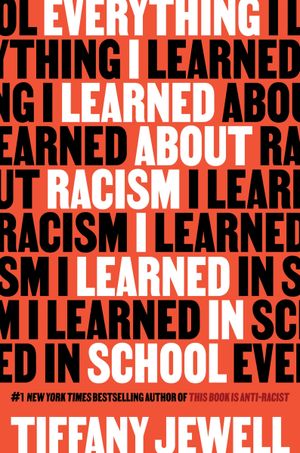
From the #1 New York Times bestselling author of This Book Is Anti-Racist and The Antiracist Kid, Tiffany Jewell, this YA nonfiction book, highlighting inequities Black and Brown students face from preschool through college, is the most important, empowering read this year.
From preschool to higher education and everything in between, Everything I Learned About Racism I Learned in School focuses on the experiences Black and Brown students face as a direct result of the racism built into schools across the United States.
The overarching nonfiction narrative follows author Tiffany Jewell from early elementary school through her time at college, unpacking the history of systemic racism in the American educational system along the way. Throughout the book, other writers of the global majority share a wide variety of personal narratives and stories based on their own school experiences.
Contributors include New York Times bestseller Joanna Ho; award winners Minh Lê, Randy Ribay, and Torrey Maldonado; authors James Bird and Rebekah Borucki; author-educators Amelia A. Sherwood, Roberto Germán, Liz Kleinrock, Gary R. Gray Jr., Lorena Germán, Patrick Harris II, shea wesley martin, David Ryan Barcega Castro-Harris, Ozy Aloziem, Gayatri Sethi, and Dulce-Marie Flecha; and even a couple of teen writers!
Everything I Learned About Racism I Learned in School provides young folks with the context to think critically about and chart their own course through their current schooling—and any future schooling they may pursue.
2. Black Birds in the Sky by Brandy Colbert
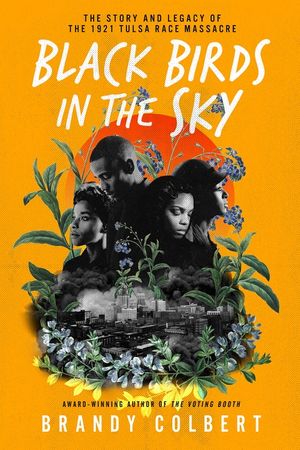 A searing new work of nonfiction from award-winning author Brandy Colbert about the history and legacy of one of the most deadly and destructive acts of racial violence in American history: the Tulsa Race Massacre.
In the early morning of June 1, 1921, a white mob marched across the train tracks in Tulsa, Oklahoma, and into its predominantly Black Greenwood District—a thriving, affluent neighborhood known as America’s Black Wall Street. They brought with them firearms, gasoline, and explosives.
In a few short hours, they’d razed thirty-five square blocks to the ground, leaving hundreds dead. The Tulsa Race Massacre is one of the most devastating acts of racial violence in US history. But how did it come to pass? What exactly happened? And why are the events unknown to so many of us today?
These are the questions that award-winning author Brandy Colbert seeks to answer in this unflinching nonfiction account of the Tulsa Race Massacre. In examining the tension that was brought to a boil by many factors—white resentment of Black economic and political advancement, the resurgence of white supremacist groups, the tone and perspective of the media, and more—a portrait is drawn of an event singular in its devastation, but not in its kind. It is part of a legacy of white violence that can be traced from our country’s earliest days through Reconstruction, the Civil Rights movement in the mid–twentieth century, and the fight for justice and accountability Black Americans still face today.
The Tulsa Race Massacre has long failed to fit into the story Americans like to tell themselves about the history of their country. This book, ambitious and intimate in turn, explores the ways in which the story of the Tulsa Race Massacre is the story of America—and by showing us who we are, points to a way forward.
3. I Rise by Marie Arnold
 A heartbreaking and powerful novel about racism and social justice as fourteen-year-old Ayo has to decide whether to take on her mother’s activist role when her mom is shot by police. As she tries to find answers, Ayo looks to the wisdom of her ancestors and her Harlem community for guidance.
Ayo’s mother founded the biggest civil rights movement to hit New York City in decades. It’s called ‘See Us’ and it tackles police brutality and racial profiling in Harlem. Ayo has spent her entire life being an activist and now, she wants out. She wants to get her first real kiss, have a boyfriend, and just be a normal teen.
When her mom is put into a coma after a riot breaks out between protesters and police, protestors want Ayo to become the face of See Us and fight for justice for her mother who can no longer fight for herself. While she deals with her grief and anger, Ayo must also discover if she has the strength to take over where her mother left off.
This impactful and unforgettable novel takes on the important issues of inequality, systemic racism, police violence, and social justice.
4. The Hate U Give by Angie Thomas

Sixteen-year-old Starr Carter moves between two worlds: the poor neighborhood where she lives and the fancy suburban prep school she attends. The uneasy balance between these worlds is shattered when Starr witnesses the fatal shooting of her childhood best friend Khalil at the hands of a police officer. Khalil was unarmed.
Soon afterward, his death is a national headline. Some are calling him a thug, maybe even a drug dealer and a gangbanger. Protesters are taking to the streets in Khalil’s name. Some cops and the local drug lord try to intimidate Starr and her family. What everyone wants to know is: what really went down that night? And the only person alive who can answer that is Starr.
But what Starr does—or does not—say could upend her community. It could also endanger her life.
5. Monster by Walter Dean Myers
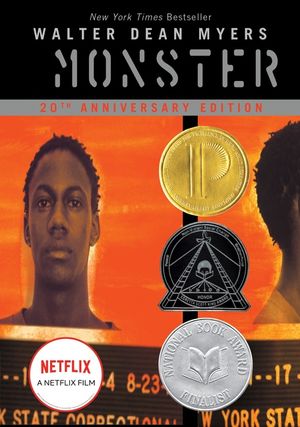 This New York Times bestselling novel from acclaimed author Walter Dean Myers tells the story of Steve Harmon, a teenage boy in juvenile detention and on trial.
Presented as a screenplay of Steve’s own imagination, and peppered with journal entries, the book shows how one single decision can change our whole lives.
Monster is a multi-award-winning, provocative coming-of-age story that was the first-ever Michael L. Printz Award recipient, an ALA Best Book, a Coretta Scott King Honor selection, and a National Book Award finalist.
Monster is now a major motion picture called All Rise and starring Jennifer Hudson, Kelvin Harrison, Jr., Nas, and A$AP Rocky.
The late Walter Dean Myers was a National Ambassador for Young People’s Literature, who was known for his commitment to realistically depicting kids from his hometown of Harlem.
6. All You Have to Do by Autumn Allen
 In April 1968, in the wake of Martin Luther King, Jr.’s assassination, Kevin joins a protest that shuts down his Ivy League campus…
In September 1995, amidst controversy over the Million Man March, Gibran challenges the “See No Color” hypocrisy of his prestigious New England prep school…
As the two students, whose lives overlap in powerful ways, risk losing the opportunities their parents worked hard to provide, they move closer to discovering who they want to be instead of accepting as fact who society and family tell them they are.
7. Punching the Air by Ibi Zoboi & Yusef Salaam
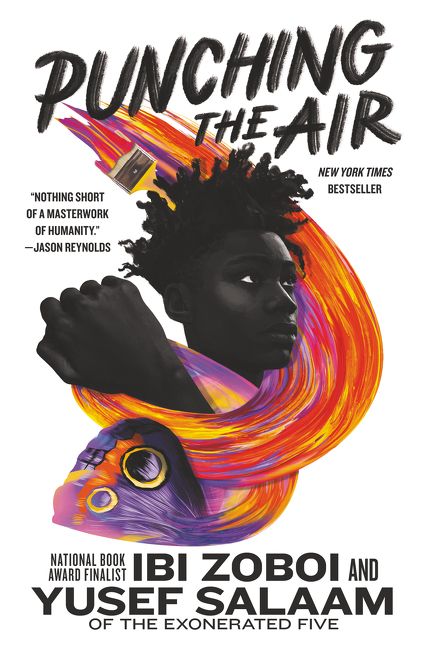
The story that I thought
was my life
didn’t start on the day
I was born
Amal Shahid has always been an artist and a poet. But even in a diverse art school, because of a biased system he’s seen as disruptive and unmotivated. Then, one fateful night, an altercation in a gentrifying neighborhood escalates into tragedy. “Boys just being boys” turns out to be true only when those boys are white.
The story that I think
will be my life
starts today
Suddenly, at just sixteen years old, Amal is convicted of a crime he didn’t commit and sent to prison. Despair and rage almost sink him until he turns to the refuge of his words, his art. This never should have been his story. But can he change it?
8. Queer, There, and Everywhere by Sarah Prager
 World history has been made by countless lesbian, gay, bisexual, transgender, and queer individuals—and you’ve never heard of many of them.
Queer author and activist Sarah Prager delves deep into the lives of 23 people who fought, created, and loved on their own terms. From high-profile figures like Abraham Lincoln and Eleanor Roosevelt to the trailblazing gender-ambiguous Queen of Sweden and a bisexual blues singer who didn’t make it into your history books, these astonishing true stories uncover a rich queer heritage that encompasses every culture, in every era.
By turns hilarious and inspiring, the beautifully illustrated Queer, There, and Everywhere is for anyone who wants the real story of the queer rights movement.
9. The Silence That Binds Us by Joanna Ho
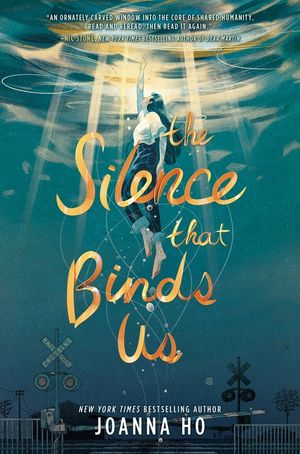 Joanna Ho, New York Times bestselling author of Eyes That Kiss in the Corners, has written an exquisite, heart-rending debut young adult novel that will inspire all to speak truth to power.
Maybelline Chen isn’t the Chinese Taiwanese American daughter her mother expects her to be. May prefers hoodies over dresses and wants to become a writer. When asked, her mom can’t come up with one specific reason for why she’s proud of her only daughter. May’s beloved brother, Danny, on the other hand, has just been admitted to Princeton. But Danny secretly struggles with depression, and when he dies by suicide, May’s world is shattered.
In the aftermath, racist accusations are hurled against May’s parents for putting too much “pressure” on him. May’s father tells her to keep her head down. Instead, May challenges these ugly stereotypes through her writing. Yet the consequences of speaking out run much deeper than anyone could foresee. Who gets to tell our stories, and who gets silenced? It’s up to May to take back the narrative.
Joanna Ho masterfully explores timely themes of mental health, racism, and classism.
10. This Place Is Still Beautiful by XiXi Tian
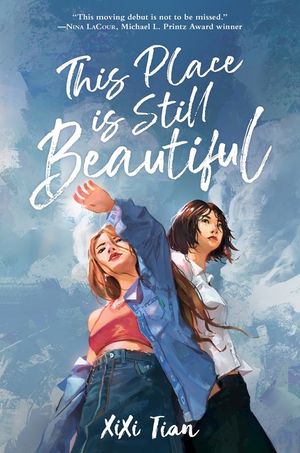 A sweeping debut novel about first love, complicated family dynamics, and the pernicious legacy of racism. Perfect for fans of Tahereh Mafi, Jandy Nelson, and Emily X.R. Pan, with crossover appeal for readers of Brit Bennett’s The Vanishing Half and Celeste Ng’s Everything I Never Told You.
The Flanagan sisters are as different as they come. Seventeen-year-old Annalie is bubbly, sweet, and self-conscious, whereas nineteen-year-old Margaret is sharp and assertive. Margaret looks just like their mother, while Annalie passes for white and looks like the father who abandoned them years ago, leaving their Chinese immigrant mama to raise the girls alone in their small, predominantly white Midwestern town.
When their house is vandalized with a shocking racial slur, Margaret rushes home from her summer internship in New York City. She expects outrage. Instead, her sister and mother would rather move on. Especially once Margaret’s own investigation begins to make members of their community uncomfortable.
For Annalie, this was meant to be a summer of new possibilities, and she resents her sister’s sudden presence and insistence on drawing negative attention to their family. Meanwhile Margaret is infuriated with Annalie’s passive acceptance of what happened. For Margaret, the summer couldn’t possibly get worse, until she crosses paths with someone she swore she’d never see again: her first love, Rajiv Agarwal.
As the sisters navigate this unexpected summer, an explosive secret threatens to break apart their relationship, once and for all.
This Place Is Still Beautiful is a luminous, captivating story about identity, sisterhood, and how our hometowns are inextricably a part of who we are, even when we outgrow them.
11. This Town Is On Fire by Pamela N. Harris
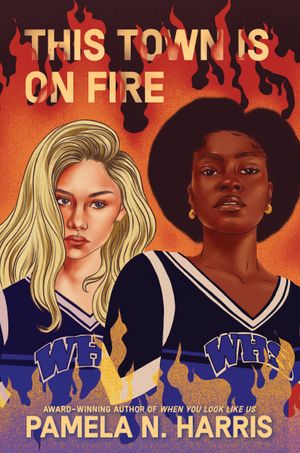
From the critically acclaimed author of When You Look Like Us comes a page-turning YA contemporary novel about what happens when the latest “Becky” on the internet is your best friend.
A lot is up in the air in Naomi Henry’s life: her spot as a varsity cheer flier, her classmates’ reaction to the debut of her natural hair, and her crush on the guy who’s always been like a brother to her. With so much uncertainty, she feels lucky to have a best friend like Kylie to keep her grounded. After all, they’re practically sisters—Naomi’s mom took care of Kylie and her twin brother for years.
But then a video of Kylie calling the cops on two Black teens in a shopping store parking lot goes viral. Naomi is shaken, and her town is reeling from the publicity. While Naomi tries to reckon with Kylie, the other Black students in their high school are questioning their friendship, and her former friends are wondering where this new “woke” Naomi came from. Although Naomi wants to stand by her best friend, she now can’t help but see everything in a different light.
As tensions in her town escalate, Naomi finds herself engaging in protests that are on the cusp of being illegal. And then a bomb explodes, and someone is found dead. Will Naomi be caught in the center of the blast?
12. The Black Kids by Christina Hammonds Reed
 Ashley Bennett and her friends are living the charmed life. It’s the end of senior year and they’re spending more time at the beach than in the classroom. They can already feel the sunny days and endless possibilities of summer.
Everything changes one afternoon in April, when four LAPD officers are acquitted after beating a black man named Rodney King half to death. Suddenly, Ashley’s not just one of the girls. She’s one of the black kids.
As violent protests engulf LA and the city burns, Ashley tries to continue on as if life were normal. Even as her self-destructive sister gets dangerously involved in the riots. Even as the model black family façade her wealthy and prominent parents have built starts to crumble. Even as her best friends help spread a rumor that could completely derail the future of her classmate and fellow black kid, LaShawn Johnson.
With her world splintering around her, Ashley, along with the rest of LA, is left to question who is the us? And who is the them?
13. Butterfly Yellow by Thanhhà Lại
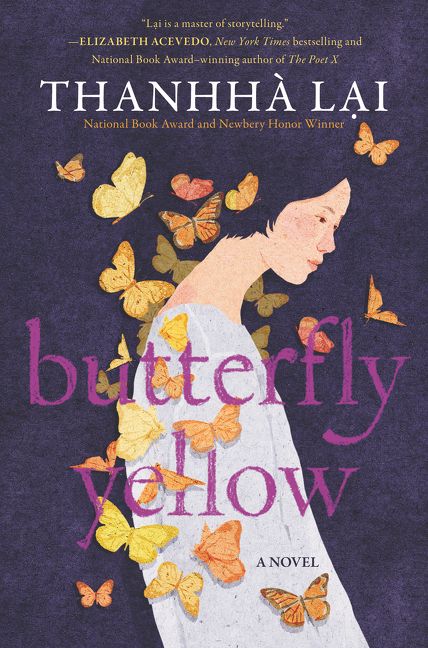 In the final days of the Việt Nam War, Hằng takes her little brother, Linh, to the airport, determined to find a way to safety in America. In a split second, Linh is ripped from her arms—and Hằng is left behind in the war-torn country.
Six years later, Hằng has made the brutal journey from Việt Nam and is now in Texas as a refugee. She doesn’t know how she will find the little brother who was taken from her until she meets LeeRoy, a city boy with big rodeo dreams, who decides to help her.
Hằng is overjoyed when she reunites with Linh. But when she realizes he doesn’t remember her, their family, or Việt Nam, her heart is crushed. Though the distance between them feels greater than ever, Hằng has come so far that she will do anything to bridge the gap.
14. Dear Martin by Nic Stone
 Justyce McAllister is top of his class and set for the Ivy League—but none of that matters to the police officer who just put him in handcuffs. And despite leaving his rough neighborhood behind, he can’t escape the scorn of his former peers or the ridicule of his new classmates. Justyce looks to the teachings of Dr. Martin Luther King Jr. for answers. But do they hold up anymore? He starts a journal to Dr. King to find out.
Then comes the day Justyce goes driving with his best friend, Manny, windows rolled down, music turned up—way up, sparking the fury of a white off-duty cop beside them. Words fly. Shots are fired. Justyce and Manny are caught in the crosshairs. In the media fallout, it’s Justyce who is under attack.
15. Last Night at the Telegraph Club by Malinda Lo
 “That book. It was about two women, and they fell in love with each other.” And then Lily asked the question that had taken root in her, that was even now unfurling its leaves and demanding to be shown the sun: “Have you ever heard of such a thing?”
Seventeen-year-old Lily Hu can’t remember exactly when the question took root, but the answer was in full bloom the moment she and Kathleen Miller walked under the flashing neon sign of a lesbian bar called the Telegraph Club.
America in 1954 is not a safe place for two girls to fall in love, especially not in Chinatown. Red-Scare paranoia threatens everyone, including Chinese Americans like Lily. With deportation looming over her father—despite his hard-won citizenship—Lily and Kath risk everything to let their love see the light of day.
16. Black Enough, edited by Ibi Zoboi
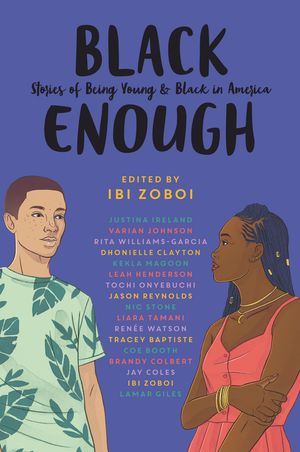 Black is…sisters navigating their relationship at summer camp in Portland, Oregon, as written by Renée Watson.
Black is…three friends walking back from the community pool talking about nothing and everything, in a story by Jason Reynolds.
Black is…Nic Stone’s high-class beauty dating a boy her momma would never approve of.
Black is…two girls kissing in Justina Ireland’s story set in Maryland.
Black is urban and rural, wealthy and poor, mixed race, immigrants, and more—because there are countless ways to be Black enough.
17. Stamped: Racism, Antiracism, and You by Ibram X. Kendi and Jason Reynolds
 This is not a history book. This is a book about the here and now. A book to help us better understand why we are where we are. A book about race.
The construct of race has always been used to gain and keep power, to create dynamics that separate and silence. This remarkable reimagining of Dr. Ibram X. Kendi’s National Book Award-winning Stamped from the Beginning reveals the history of racist ideas in America, and inspires hope for an antiracist future. It takes you on a race journey from then to now, shows you why we feel how we feel, and why the poison of racism lingers. It also proves that while racist ideas have always been easy to fabricate and distribute, they can also be discredited.
Through a gripping, fast-paced, and energizing narrative written by beloved award-winner Jason Reynolds, this book shines a light on the many insidious forms of racist ideas–and on ways readers can identify and stamp out racist thoughts in their daily lives.
18. All American Boys by Jason Reynolds and Brendan Kiely
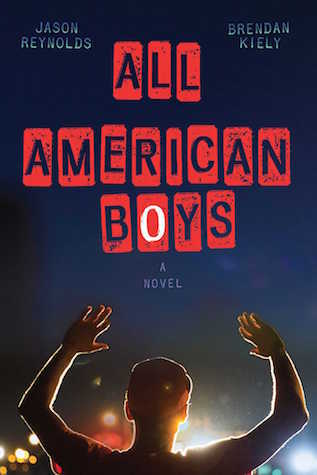 Rashad is absent again today.
That’s the sidewalk graffiti that started it all…
Well, no, actually, a lady tripping over Rashad at the store, making him drop a bag of chips, was what started it all. Because it didn’t matter what Rashad said next—that it was an accident, that he wasn’t stealing—the cop just kept pounding him. Over and over, pummeling him into the pavement. So then Rashad, an ROTC kid with mad art skills, was absent again…and again…stuck in a hospital room. Why? Because it looked like he was stealing. And he was a black kid in baggy clothes. So he must have been stealing.
And that’s how it started.
And that’s what Quinn, a white kid, saw. He saw his best friend’s older brother beating the daylights out of a classmate. At first Quinn doesn’t tell a soul…He’s not even sure he understands it. And does it matter? The whole thing was caught on camera, anyway. But when the school—and nation—start to divide on what happens, blame spreads like wildfire fed by ugly words like “racism” and “police brutality.” Quinn realizes he’s got to understand it, because, bystander or not, he’s a part of history. He just has to figure out what side of history that will be.
Rashad and Quinn—one black, one white, both American—face the unspeakable truth that racism and prejudice didn’t die after the civil rights movement. There’s a future at stake, a future where no one else will have to be absent because of police brutality. They just have to risk everything to change the world.
Cuz that’s how it can end.
19. Everything Within and In Between by Nikki Barthelmess
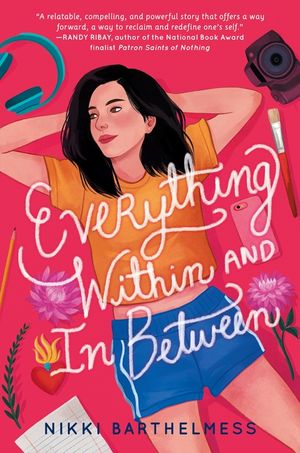
For Ri Fernández’s entire life, she’s been told, “We live in America and we speak English.” Raised by her strict Mexican grandma, Ri has never been allowed to learn Spanish.
What’s more, her grandma has pulled Ri away from the community where they once belonged. In its place, Ri has grown up trying to fit in among her best friend’s world of mansions and country clubs in an attempt try to live out her grandmother’s version of the “American Dream.”
In her heart, Ri has always believed that her mother, who disappeared when Ri was young, would accept her exactly how she is and not try to turn her into someone she’s never wanted to be. So when Ri finds a long-hidden letter from her mom begging for a visit, she decides to reclaim what Grandma kept from her: her heritage and her mom.
But nothing goes as planned. Her mom isn’t who Ri imagined she would be and finding her doesn’t make Ri’s struggle to navigate the interweaving threads of her mixed heritage any less complicated. Nobody has any idea of who Ri really is—not even Ri herself.
20. Lawn Boy by Jonathan Evison
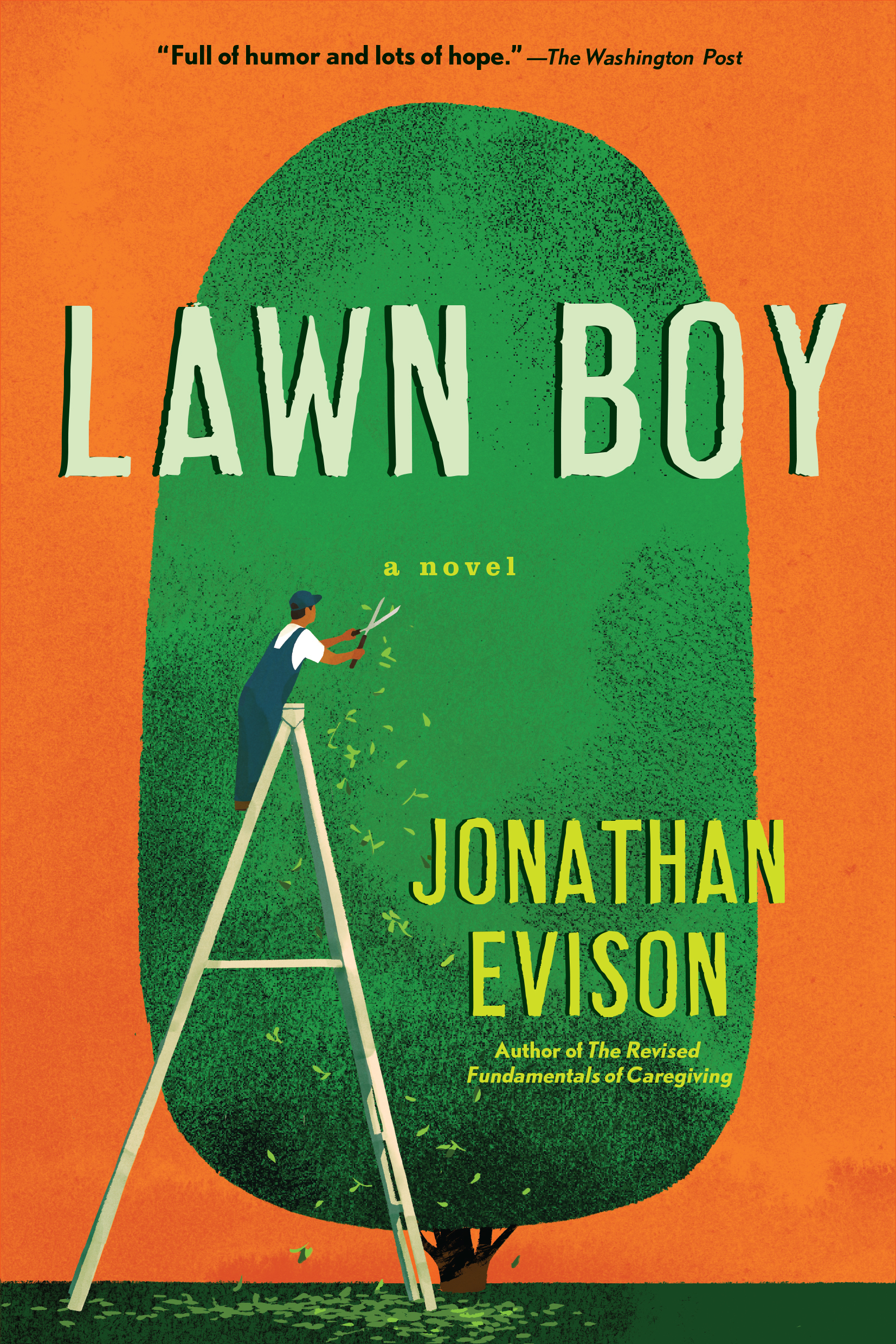 For Mike Muñoz, a young Chicano living in Washington State, life has been a whole lot of waiting for something to happen. Not too many years out of high school and still doing menial work—and just fired from his latest gig as a lawn boy on a landscaping crew—he knows that he’s got to be the one to shake things up if he’s ever going to change his life. But how?
In this funny, angry, touching, and ultimately deeply inspiring novel, bestselling author Jonathan Evison takes the reader into the heart and mind of a young man on a journey to discover himself, a search to find the secret to achieving the American dream of happiness and prosperity. That’s the birthright for all Americans, isn’t it? If so, then what is Mike Muñoz’s problem? Though he tries time and again to get his foot on the first rung of that ladder to success, he can’t seem to get a break. But then things start to change for Mike, and after a raucous, jarring, and challenging trip, he finds he can finally see the future and his place in it. And it’s looking really good.
Lawn Boy is an important, entertaining, and completely winning novel about social class distinctions, about overcoming cultural discrimination, and about standing up for oneself.
21. The Black Friend: On Being a Better Person by Frederick Joseph
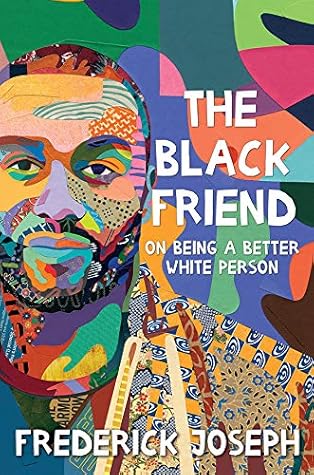 “We don’t see color.” “I didn’t know Black people liked Star Wars!” “What hood are you from?”
For Frederick Joseph, life as a transfer student in a largely white high school was full of wince-worthy moments that he often simply let go. As he grew older, however, he saw these as missed opportunities not only to stand up for himself, but to spread awareness to those white people who didn’t see the negative impact they were having.
Speaking directly to the reader, The Black Friend calls up race-related anecdotes from the author’s past, weaving in his thoughts on why they were hurtful and how he might handle things differently now.
Each chapter features the voice of at least one artist or activist, including Angie Thomas, author of The Hate U Give; April Reign, creator of #OscarsSoWhite; Jemele Hill, sports journalist and podcast host; and eleven others. Touching on everything from cultural appropriation to power dynamics, “reverse racism” to white privilege, microaggressions to the tragic results of overt racism, this book serves as conversation starter, tool kit, and invaluable window into the life of a former “token Black kid” who now presents himself as the friend many readers need.
22. Out of Darkness by Ashley Hope Pérez
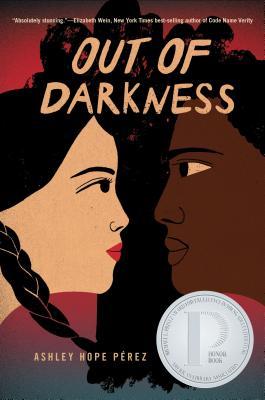 This is East Texas, and there’s lines. Lines you cross, lines you don’t cross. That clear? New London, TX. 1937. Naomi Vargas is Mexican American. Wash Fuller is Black. These teens know the town’s divisive racism better than anyone. But sometimes the attraction between two people is so powerful it breaks through even the most entrenched color lines. And the consequences can be explosive.
Naomi and Wash dare to defy the rules, and the New London school explosion serves as a ticking time bomb in the background. Can their love survive both prejudice and tragedy?
Race, romance, and family converge in this riveting novel that transplants Romeo and Juliet to a bitterly segregated Texas town. Includes a fascinating author’s note detailing the process of research and writing about voices that have largely been excluded from historical accounts.
23. Hollow Fires by Samira Ahmed
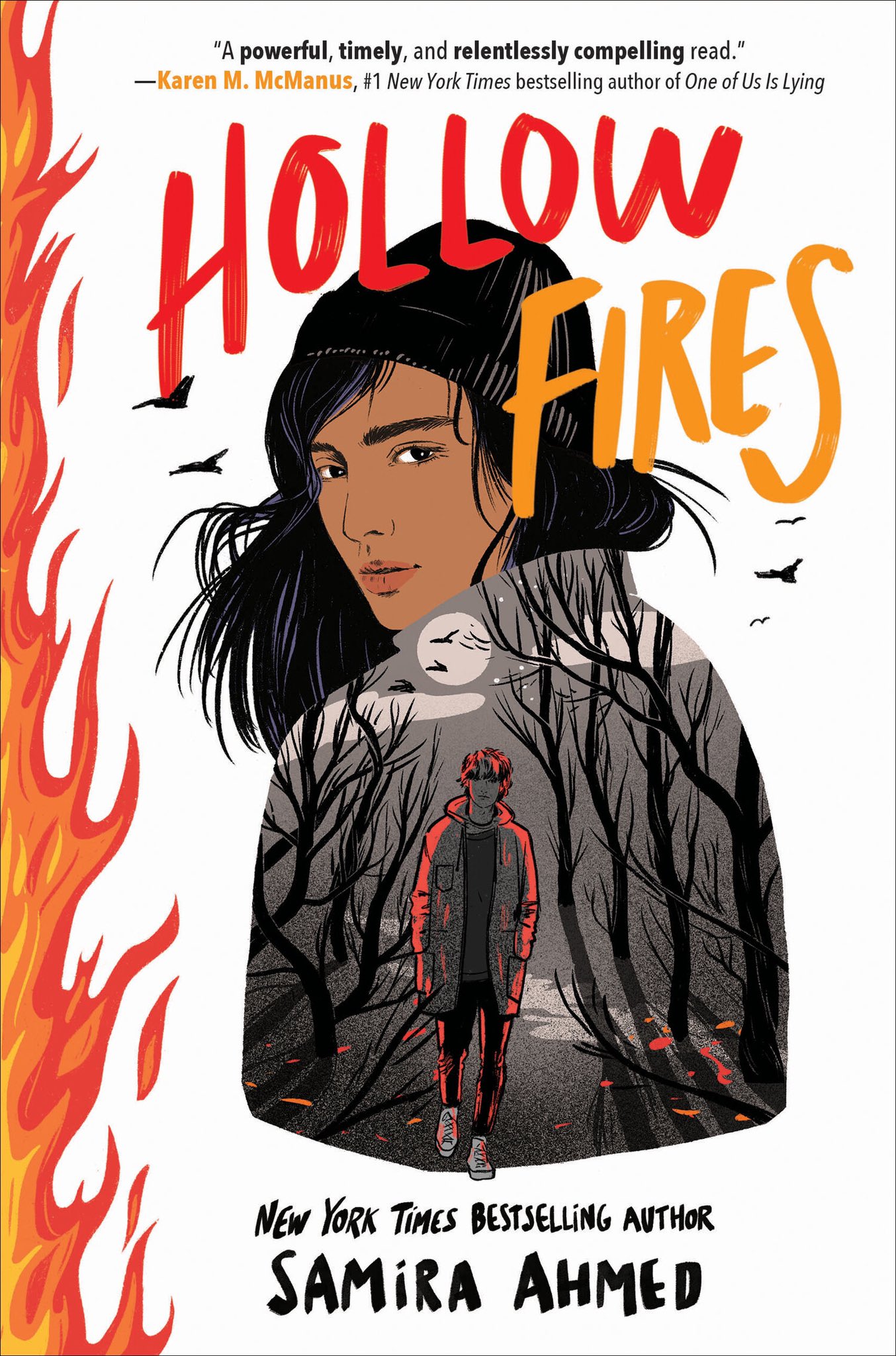 Safiya Mirza dreams of becoming a journalist. And one thing she’s learned as editor of her school newspaper is that a journalist’s job is to find the facts and not let personal biases affect the story. But all that changes the day she finds the body of a murdered boy.
Jawad Ali was fourteen years old when he built a cosplay jetpack that a teacher mistook for a bomb. A jetpack that got him arrested, labeled a terrorist—and eventually killed. But he’s more than a dead body, and more than “Bomb Boy.” He was a person with a life worth remembering.
Driven by Jawad’s haunting voice guiding her throughout her investigation, Safiya seeks to tell the whole truth about the murdered boy and those who killed him because of their hate-based beliefs.
This gripping and powerful book uses an innovative format and lyrical prose to expose the evil that exists in front of us, and the silent complicity of the privileged who create alternative facts to bend the truth to their liking.
24. Ghost Boys by Jewell Parker Rhodes
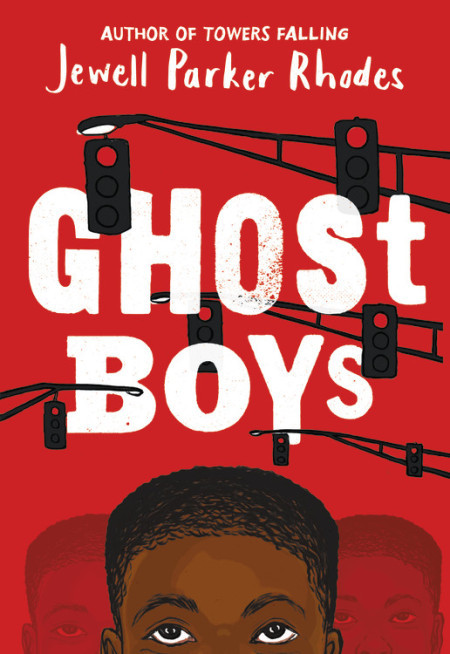 Twelve-year-old Jerome is shot by a police officer who mistakes his toy gun for a real threat. As a ghost, he observes the devastation that’s been unleashed on his family and community in the wake of what they see as an unjust and brutal killing.
Soon Jerome meets another ghost: Emmett Till, a boy from a very different time but similar circumstances. Emmett helps Jerome process what has happened, on a journey towards recognizing how historical racism may have led to the events that ended his life. Jerome also meets Sarah, the daughter of the police officer, who grapples with her father’s actions.
25. Invisible Son by Kim Johnson
 Life can change in an instant.
When you’re wrongfully accused of a crime.
When a virus shuts everything down.
When the girl you love moves on.
Andre Jackson is determined to reclaim his identity. But returning from juvie doesn’t feel like coming home. His Portland, Oregon, neighborhood is rapidly gentrifying, and COVID-19 shuts down school before he can return. And Andre’s suspicions about his arrest for a crime he didn’t commit even taint his friendships. It’s as if his whole life has been erased.
The one thing Andre is counting on is his relationship with the Whitaker kids—especially his longtime crush, Sierra. But Sierra’s brother Eric is missing, and the facts don’t add up as their adoptive parents fight to keep up the act that their racially diverse family is picture-perfect. If Andre can find Eric, he just might uncover the truth about his own arrest. But in a world where power is held by a few and Andre is nearly invisible, searching for the truth is a dangerous game.
26. Don’t Ask Me Where I’m From by Jennifer De Leon
 Liliana Cruz is a hitting a wall—or rather, walls.
There’s the wall her mom has put up ever since Liliana’s dad left—again.
There’s the wall that delineates Liliana’s diverse inner-city Boston neighborhood from Westburg, the wealthy—and white—suburban high school she’s just been accepted into.
And there’s the wall Liliana creates within herself, because to survive at Westburg, she can’t just lighten up, she has to whiten up.
So what if she changes her name? So what if she changes the way she talks? So what if she’s seeing her neighborhood in a different way? But then light is shed on some hard truths: It isn’t that her father doesn’t want to come home—he can’t…and her whole family is in jeopardy. And when racial tensions at school reach a fever pitch, the walls that divide feel insurmountable.
But a wall isn’t always a barrier. It can be a foundation for something better. And Liliana must choose: Use this foundation as a platform to speak her truth, or risk crumbling under its weight.
27. You Truly Assumed by Laila Sabreen
 In this compelling and thought-provoking debut novel, after a terrorist attack rocks the country and anti-Islamic sentiment stirs, three Black Muslim girls create a space where they can shatter assumptions and share truths.
Sabriya has her whole summer planned out in color-coded glory, but those plans go out the window after a terrorist attack near her home. When the terrorist is assumed to be Muslim and Islamophobia grows, Sabriya turns to her online journal for comfort. You Truly Assumed was never meant to be anything more than an outlet, but the blog goes viral as fellow Muslim teens around the country flock to it and find solace and a sense of community.
Soon two more teens, Zakat and Farah, join Bri to run You Truly Assumed and the three quickly form a strong friendship. But as the blog’s popularity grows, so do the pushback and hateful comments. When one of them is threatened, the search to find out who is behind it all begins, and their friendship is put to the test when all three must decide whether to shut down the blog and lose what they’ve worked for…or take a stand and risk everything to make their voices heard.
28. A Sitting in St. James by Rita Williams-Garcia
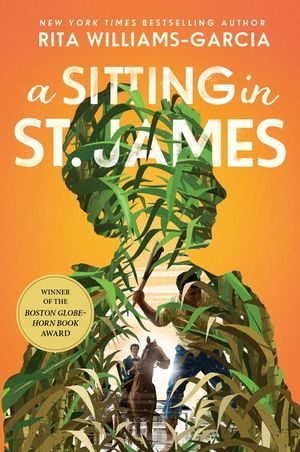 1860, Louisiana. After serving as mistress of Le Petit Cottage for more than six decades, Madame Sylvie Guilbert has decided, in spite of her family’s objections, to sit for a portrait.
While Madame plots her last hurrah, stories that span generations—from the big house to out in the fields—of routine horrors, secrets buried as deep as the family fortune, and the tangled bonds of descendants and enslaved.
This astonishing novel from award-winning author Rita Williams-Garcia about the interwoven lives of those bound to a plantation in antebellum America is an epic masterwork—empathetic, brutal, and entirely human.
29. An Emotion of Great Delight by Tahereh Mafi
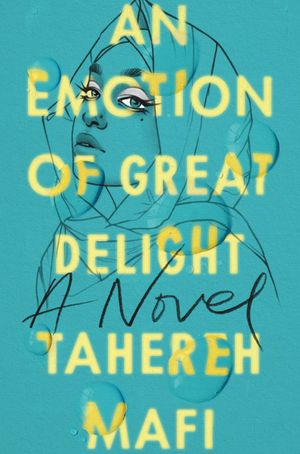 It’s 2003, several months since the US officially declared war on Iraq, and the American political world has evolved. Tensions are high, hate crimes are on the rise, FBI agents are infiltrating local mosques, and the Muslim community is harassed and targeted more than ever. Shadi, who wears hijab, keeps her head down.
She’s too busy drowning in her own troubles to find the time to deal with bigots.
Shadi is named for joy, but she’s haunted by sorrow. Her brother is dead, her father is dying, her mother is falling apart, and her best friend has mysteriously dropped out of her life. And then, of course, there’s the small matter of her heart—
It’s broken.
Shadi tries to navigate her crumbling world by soldiering through, saying nothing. She devours her own pain, each day retreating farther and farther inside herself until finally, one day, everything changes.
She explodes.
30. Monday’s Not Coming by Tiffany D. Jackson
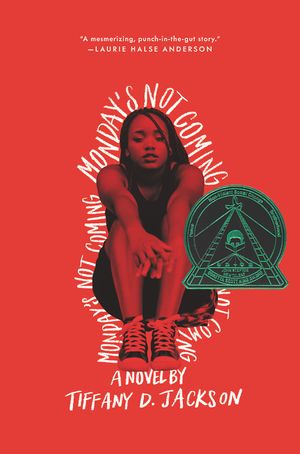 Monday Charles is missing, and only Claudia seems to notice. Claudia and Monday have always been inseparable—more sisters than friends. So when Monday doesn’t turn up for the first day of school, Claudia’s worried.
When she doesn’t show for the second day, or second week, Claudia knows that something is wrong. Monday wouldn’t just leave her to endure tests and bullies alone. Not after last year’s rumors and not with her grades on the line. Now Claudia needs her best—and only—friend more than ever. But Monday’s mother refuses to give Claudia a straight answer, and Monday’s sister April is even less help.
As Claudia digs deeper into her friend’s disappearance, she discovers that no one seems to remember the last time they saw Monday. How can a teenage girl just vanish without anyone noticing that she’s gone?
31. This Time Will Be Different by Misa Sugiura
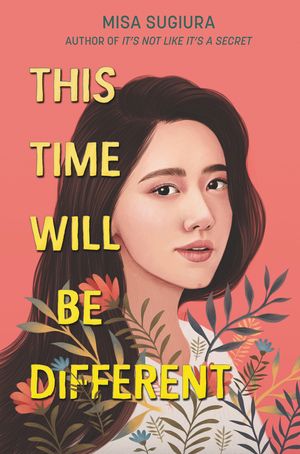 Katsuyamas never quit—but seventeen-year-old CJ doesn’t even know where to start. She’s never lived up to her mom’s type A ambition, and she’s perfectly happy just helping her aunt, Hannah, at their family’s flower shop.
She doesn’t buy into Hannah’s romantic ideas about flowers and their hidden meanings, but when it comes to arranging the perfect bouquet, CJ discovers a knack she never knew she had. A skill she might even be proud of.
Then her mom decides to sell the shop—to the family who swindled CJ’s grandparents when thousands of Japanese Americans were sent to internment camps during WWII. Soon a rift threatens to splinter CJ’s family, friends, and their entire Northern California community; and for the first time, CJ has found something she wants to fight for.
32. I’m Not Dying with You Tonight by Kimberly Jones and Gilly Segal
 An NAACP Image Award Nominee, I’m Not Dying with You Tonight follows two teen girls–one black, one white–who have to confront their own assumptions about racial inequality as they rely on each other to get through the violent race riot that has set their city on fire with civil unrest.
Lena has her killer style, her awesome boyfriend, and a plan. She knows she’s going to make it big. Campbell, on the other hand, is just trying to keep her head down and get through the year at her new school.
When both girls attend the Friday-night football game, what neither expects is for everything to descend into sudden mass chaos. Chaos born from violence and hate. Chaos that unexpectedly throws them together.
They aren’t friends. They hardly understand the other’s point of view. But none of that matters when the city is up in flames, and they only have each other to rely on if they’re going to survive the night.
33. #NotYourPrincess by Lisa Charleyboy
 Whether looking back to a troubled past or welcoming a hopeful future, the powerful voices of Indigenous women across North America resound in this book.
In the same style as the best-selling Dreaming in Indian, #NotYourPrincess presents an eclectic collection of poems, essays, interviews, and art that combine to express the experience of being a Native woman. Stories of abuse, humiliation, and stereotyping are countered by the voices of passionate women making themselves heard and demanding change.
Sometimes angry, often reflective, but always strong, the women in this book will give teen readers insight into the lives of women who, for so long, have been virtually invisible.