

 Do you ever just… love books?! We love how they shape the world we live in and how reading can open our minds to new ideas and perspectives. And honestly, books just make you smarter. If you’re in your literacy era, these twelve books will broaden your horizons, teach you something new, and just generally make you smarter 🧠 Happy reading!
 Books That Make You Smarter
TWELVE YA NONFICTION BOOKS
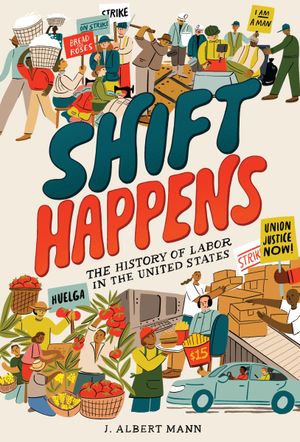
1. Shift Happens: The History Of Labor In The United States
You need to work to live.
That’s the truth for most people, and plenty of people in power have been abusing that truth for centuries.
Long before the first labor unions were formed, workers still knew what exploitation looked like. It looked like the enslavement of Black people. It looked like generations of children dying in dangerous jobs. It looked like wealthy people hiring private militaries to attack their employees.
But workers have always found a way to fight back. Lokono tribespeople resisted Columbus and his colonizers. Enslaved people led walkouts and rebellions. Textile workers demanded a wage that would let them have fun, not just survive. Miners died for the right to unionize. From 30,000 young seamstresses striking in the early 1900s to Uber drivers organizing for change today, people have learned we’re stronger when we are united.
Shift Happens is a smart, funny, and engaging look at the history of the worker actions that brought us weekends, pay equality, desegregation, an end to child labor, and so much more.
2. Queer Ducks (and Other Animals) by Eliot Schrefer, illustrated by Jules Zuckerberg
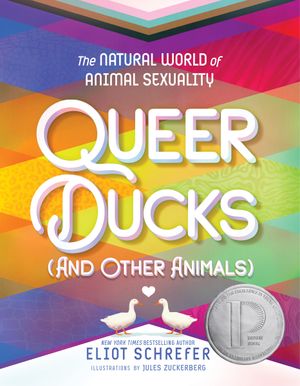
A quiet revolution has been underway in recent years, with study after study revealing substantial same-sex sexual behavior in animals. Join celebrated author Eliot Schrefer on an exploration of queer behavior in the animal world—from albatrosses to bonobos to clownfish to doodlebugs.
In sharp and witty prose—aided by humorous comics from artist Jules Zuckerberg—Schrefer uses science, history, anthropology, and sociology to illustrate the diversity of sexual behavior in the animal world. Interviews with researchers in the field offer additional insights for readers and aspiring scientists.
Queer behavior in animals is as diverse and complex—and as natural—as it is in our own species. It doesn’t set us apart from animals—it bonds us even closer to our animal selves.
3. America Redux: Visual Stories from Our Dynamic History by Ariel Aberg-Riger
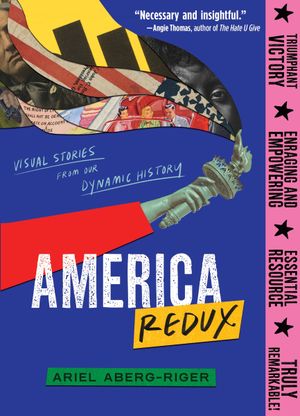
“America Redux is THE history book that belongs in every high school in America.” —Angie Thomas, New York Times bestselling author of The Hate U Give
A critical, unflinching cultural history and fierce beacon of hope for a better future, America Redux is a necessary and galvanizing read.
What are the stories we tell ourselves about America?
How do they shape our sense of history,
cloud our perceptions,
inspire us?
America Redux explores the themes that create our shared sense of American identity and interrogates the myths we’ve been telling ourselves for centuries. With iconic American catchphrases as chapter titles, these twenty-one visual stories illuminate the astonishing, unexpected, sometimes darker sides of history that reverberate in our society to this very day—from the role of celebrity in immigration policy to the influence of one small group of white women on education to the effects of “progress” on housing and the environment to the inspiring force of collective action and mutual aid across decades and among diverse groups.
Fully illustrated with collaged archival photographs, maps, documents, graphic elements, and handwritten text, this book is a dazzling, immersive experience that jumps around in time and will make you view history in a whole different light.
4. Breaking the Chains: African American Slave Resistance by William Loren Katz
 Centering Black voices and the narratives of enslaved people, this young adult history offers a thoroughly researched account with first-hand testimonies of how people in bondage were themselves a driving force behind their own emancipation.
Generations of American history students have grown up believing that enslaved people accepted their lot and became attached to their enslavers, that rebellion was rare, and that liberation from slavery happened thanks to the enslavers.
Celebrated historian and children’s book author, William Loren Katz offers a thoroughly researched look at the lives of enslaved people in the United States in Breaking the Chains. From their African abductions through their brave resistance to and escape from the ships and harsh plantation life to their roles in the Civil War, those given voice here show that enslaved people themselves were a driving force behind their emancipation.
This compelling look at history is an educational eye-opener for history buffs of all ages, and offers clarity on one of the most turbulent periods of US history. This new paperback edition features a new introduction by historian Robin D. G. Kelley.
5. Money Out Loud by Berna Anat
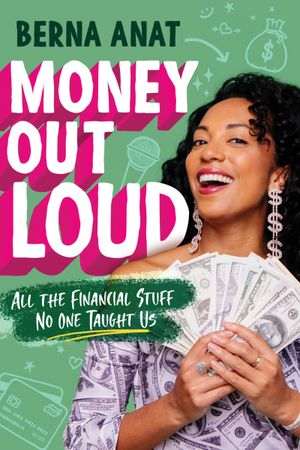
So no one taught you about money, either? Let’s figure this me$$ out together.
In this illustrated, deeply unserious guide to money, Berna Anat—aka the Financial Hype Woman—freaks out her immigrant parents by doing the unthinkable: Talking about money. Loudly.
Because we’re done staying silent, anxious, and ashamed about our money. It’s time to join the party and finally learn about all the financial stuff that always felt too confusing. Stuff like:
- How to actually budget, save, and invest (but also make it fun)
- How our traumas shape our most toxic money habits, and how to create new patterns
- How to build wealth in a system designed to keep us broke
- How to use money to fund our biggest dreams—and change the world
No more keeping our money on mute. It’s time to grab the mic.
6. Black Birds in the Sky by Brandy Colbert
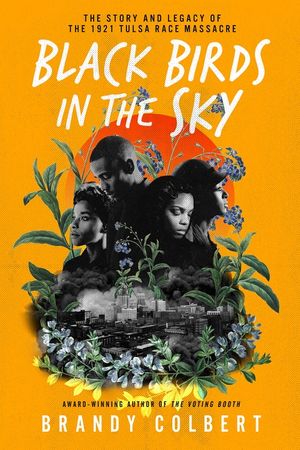
In the early morning of June 1, 1921, a white mob marched across the train tracks in Tulsa, Oklahoma, and into its predominantly Black Greenwood District—a thriving, affluent neighborhood known as America’s Black Wall Street. They brought with them firearms, gasoline, and explosives.
In a few short hours, they’d razed thirty-five square blocks to the ground, leaving hundreds dead. The Tulsa Race Massacre is one of the most devastating acts of racial violence in US history. But how did it come to pass? What exactly happened? And why are the events unknown to so many of us today?
These are the questions that award-winning author Brandy Colbert seeks to answer in this unflinching nonfiction account of the Tulsa Race Massacre. In examining the tension that was brought to a boil by many factors—white resentment of Black economic and political advancement, the resurgence of white supremacist groups, the tone and perspective of the media, and more—a portrait is drawn of an event singular in its devastation, but not in its kind. It is part of a legacy of white violence that can be traced from our country’s earliest days through Reconstruction, the Civil Rights movement in the mid–twentieth century, and the fight for justice and accountability Black Americans still face today.
The Tulsa Race Massacre has long failed to fit into the story Americans like to tell themselves about the history of their country. This book, ambitious and intimate in turn, explores the ways in which the story of the Tulsa Race Massacre is the story of America—and by showing us who we are, points to a way forward.
7. Everything I Learned About Racism I Learned In School by Tiffany Jewell
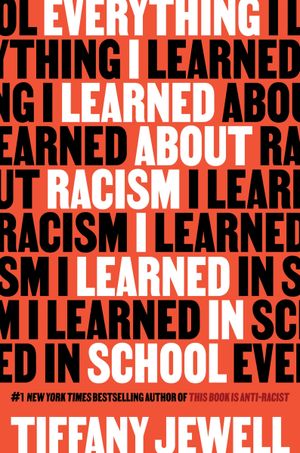
From preschool to higher education and everything in between, Everything I Learned About Racism I Learned in School focuses on the experiences Black and Brown students face as a direct result of the racism built into schools across the United States.
The overarching nonfiction narrative follows author Tiffany Jewell from early elementary school through her time at college, unpacking the history of systemic racism in the American educational system along the way. Throughout the book, other writers of the global majority share a wide variety of personal narratives and stories based on their own school experiences.
Contributors include New York Times bestseller Joanna Ho; award winners Minh Lê, Randy Ribay, and Torrey Maldonado; authors James Bird and Rebekah Borucki; author-educators Amelia A. Sherwood, Roberto Germán, Liz Kleinrock, Gary R. Gray Jr., Lorena Germán, Patrick Harris II, shea wesley martin, David Ryan Barcega Castro-Harris, Ozy Aloziem, Gayatri Sethi, and Dulce-Marie Flecha; and even a couple of teen writers!
Everything I Learned About Racism I Learned in School provides young folks with the context to think critically about and chart their own course through their current schooling—and any future schooling they may pursue.
8. The Twenty-One: The True Story of the Youth Who Sued the U.S. Government Over Climate Change by Elizabeth Rusch
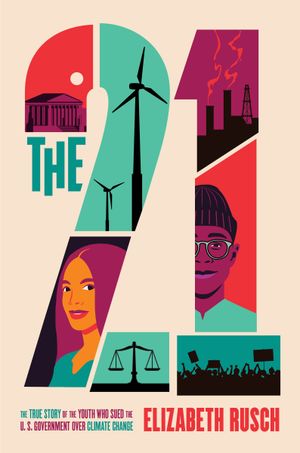
From severe flooding in Louisiana to wildfires in the Pacific Northwest to melting permafrost in Alaska, catastrophic climate events are occurring more frequently—and severely—than ever. And these events are having a direct impact on the lives (and futures) of young people and their families.
In the ongoing landmark case Juliana vs. United States, twenty-one young plaintiffs claim that the government’s support of the fossil-fuel industry is actively contributing to climate change, and that all citizens have a constitutional right to a stable climate—especially children and young adults, because they cannot vote and will inherit the problems of the future.
Elizabeth Rusch’s The Twenty-One is a gripping legal and environmental thriller that tells the story of twenty-one young people and their ongoing case against the U.S. government for denying their constitutional right to life and liberty. A rich, informative, and multifaceted read, The Twenty-One stars the young plaintiffs and their attorneys; illuminates the workings of the United States’s judicial system and the relationship between government, citizens’ rights, and the environment; and asks readers to think deeply about the future of our planet.
Features extensive backmatter, including a timeline, glossary, call to action, additional resources, and photographs.
9. What the Fact? by Dr. Seema Yasmin
 From acclaimed writer, journalist, and physician Dr. Seema Yasmin comes a book about the importance of media literacy, fact-based reporting, and the ability to discern truth from lies.
What is a fact? What are reliable sources? What is news? What is fake news? How can anyone make sense of it anymore? Well, we have to. As conspiracy theories and online hoaxes increasingly become a part of our national discourse and “truth” itself is being questioned, it has never been more vital to build the discernment necessary to tell fact from fiction, and media literacy has never been more important.
In this accessible guide, Dr. Seema Yasmin, an award-winning journalist, scientist, medical professional, and professor, traces the spread of misinformation and disinformation through our fast-moving media landscape and teaches young readers the skills that will help them identify and counter poorly-sourced clickbait and misleading headlines.
10. Stamped by Jason Reynolds and Ibram X Kendi.
 This is NOT a history book.This is a book about the here and now.
A book to help us better understand why we are where we are.
A book about race.
The construct of race has always been used to gain and keep power, to create dynamics that separate and silence. Racist ideas are woven into the fabric of this country, and the first step to building an antiracist America is acknowledging America’s racist past and present. This book takes you on that journey, showing how racist ideas started and were spread, and how they can be discredited.
Through a gripping, fast-paced, and energizing narrative written by beloved award-winner Jason Reynolds with research from renowned author Ibram X. Kendi, Stamped shines a light on the many insidious forms of racist ideas–and on ways you can identify and stamp out racist thoughts, leading to a better future.
11. 83 Days in Mariupol: A War Diary by Don Brown
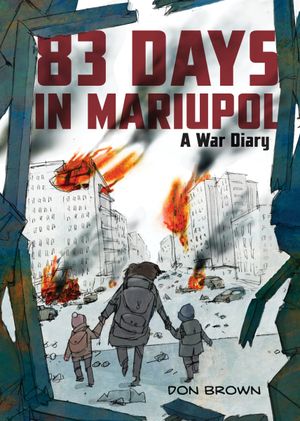 A young adult graphic novel that captures the complexities of the war in Ukraine, focusing on the siege of Mariupol (Feb ’22 – May ’22) and the brave people who stayed to defend their city against Russian forces as well as the resulting effects on global politics.
A city ruined. In once quiet residential streets, two armies battle, driving people into cellars and basements with little food or water. No lights or heat. Dwindling medical supplies. Shells and bullets deliver cruel, random death to the young and old, men, women, and children.
This is Mariupol, a Ukrainian city and early target of Russia’s invasion of Ukraine. Bordering Russian-occupied territory, the coastal city seemed doomed to a defeat that would come within days, if not hours. Could Mariupol, and Ukraine, survive? As Russian rockets threatened the city, Ukrainians resisted, and with a heroic combination of sacrifice and bravery, the besieged city endured . . . for months. But it all came at a steep cost.
With compassion and his keen journalist’s eye, Sibert Honor creator Don Brown illuminates the horrors of Mariupol and the depredations of its people not seen in the city since World War II. He also shows that outside of Mariupol, the city’s agonies were mirrored by similar events occurring in towns and cities across Ukraine.
83 Days in Mariupol reminds us that the bloody defiance shown at The Alamo, Dunkirk, Leningrad, and Thermopylae isn’t confined to the past but has a violent, modern presence. It is the story of senseless destruction, patriotism, and grit against long odds—a brutal battle whose consequences still reverberate across Ukraine and continue to reshape the global political landscape.
12. Queer, There, and Everywhere: 2nd Edition by Sarah Prager
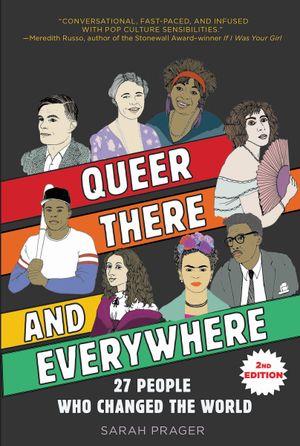
World history has been made by countless lesbian, gay, bisexual, transgender, and queer individuals—and you’ve likely never heard of many of them.
Queer author and activist Sarah Prager delves deep into the lives of 27 people who fought, created, and loved on their own terms. From high-profile figures like Abraham Lincoln and Eleanor Roosevelt to the trailblazing gender-ambiguous Queen of Sweden and a bisexual blues singer who didn’t make it into your history books, these astonishing true stories uncover a rich queer heritage that encompasses every culture, in every era.
By turns hilarious and inspiring, the beautifully illustrated Queer, There, and Everywhere is for anyone who wants the real story of the queer rights movement.