

In a world of carefully curated social feeds, memoirs serve as a much-needed reality check—a reminder that behind every perfectly posed selfie lies a complex and compelling human experience. These memoirs are windows into the hearts and minds of a diverse array of voices reflecting on their younger years, each with their own triumphs, struggles, and moments of self-discovery.
From navigating the minefield of adolescence to grappling with identity, love, loss, and everything in between, these memoirs offer a profound exploration of the human spirit in its most vulnerable and authentic form. So, whether you’re craving a dose of inspiration, seeking solace in shared experiences, or simply yearning for a literary adventure that hits close to home, these deeply personal narratives will leave you feeling understood and empowered.
12 of the Best Memoirs
THAT WILL TUG AT YOUR HEARTSTRINGS
1. All Boys Aren’t Blue by George M. Johnson
 In a series of personal essays, prominent journalist and LGBTQIA+ activist George M. Johnson explores his childhood, adolescence, and college years in New Jersey and Virginia.
From the memories of getting his teeth kicked out by bullies at age five, to flea marketing with his loving grandmother, to his first sexual relationships, this young-adult memoir weaves together the trials and triumphs faced by Black queer boys.
Both a primer for teens eager to be allies as well as a reassuring testimony for young queer men of color, All Boys Aren’t Blue covers topics such as gender identity, toxic masculinity, brotherhood, family, structural marginalization, consent, and Black joy. Johnson’s emotionally frank style of writing will appeal directly to young adults.
2. March by John Lewis and Andrew Aydin, illustrated by Nate Powell
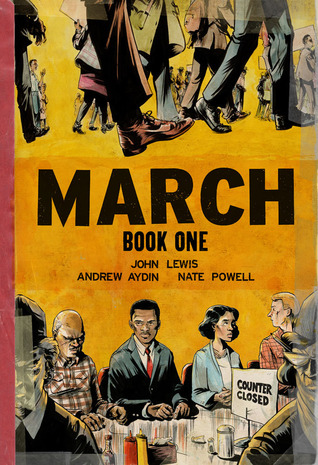 The late John Lewis was a congressman from Georgia and was, in case you weren’t aware, a civil rights hero.
John Lewis, who served in Congress from 1987 until his death in 2020, was one of the key figures of the Civil Rights Movement, and his commitment to justice and nonviolence took him from a segregated schoolroom to the 1963 March on Washington and from receiving beatings from state troopers to receiving the Medal of Freedom.
March is the first in a graphic novel trilogy, and you should totally pick it up to learn more about this American icon.
3. The Fire Never Goes Out by ND Stevenson
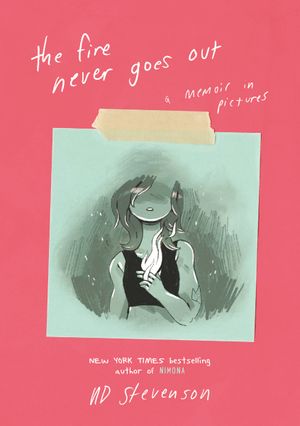
In a collection of essays and personal mini-comics that span eight years of his young adult life, author-illustrator ND Stevenson charts the highs and lows of being a creative human in the world.
Whether it’s hearing the wrong name called at his art school graduation ceremony or becoming a National Book Award finalist for his debut graphic novel, Nimona, ND captures the little and big moments that make up a real life, with a wit, wisdom, and vulnerability that are all his own.
4. Almost American Girl by Robin Ha
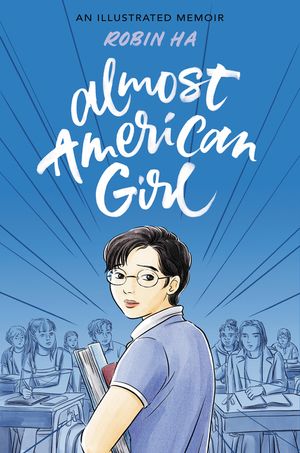 For as long as she can remember, it’s been Robin and her mom against the world. Growing up as the only child of a single mother in Seoul, Korea, wasn’t always easy, but it has bonded them fiercely together.
So when a vacation to visit friends in Huntsville, Alabama, unexpectedly becomes a permanent relocation—following her mother’s announcement that she’s getting married—Robin is devastated.
Overnight, her life changes. She is dropped into a new school where she doesn’t understand the language and struggles to keep up. She is completely cut off from her friends in Seoul and has no access to her beloved comics. At home, she doesn’t fit in with her new stepfamily, and worst of all, she is furious with the one person she is closest to—her mother.
Then one day Robin’s mother enrolls her in a local comic drawing class, which opens the window to a future Robin could never have imagined.
This nonfiction graphic novel with four starred reviews is an excellent choice for teens and also accelerated tween readers, both for independent reading and units on immigration, memoirs, and the search for identity.
5. How The Boogeyman Became A Poet by Tony Keith Jr.
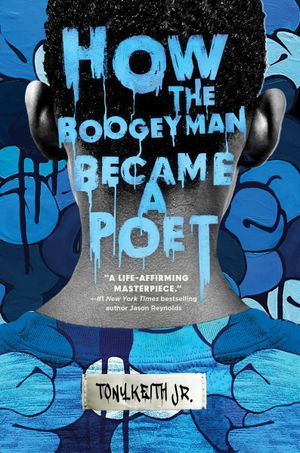
Poet, writer, and hip-hop educator Tony Keith Jr. makes his debut with a powerful YA memoir in verse, tracing his journey from being a closeted gay Black teen battling poverty, racism, and homophobia to becoming an openly gay first-generation college student who finds freedom in poetry. Perfect for fans of Elizabeth Acevedo, George M. Johnson, and Jacqueline Woodson.
Tony dreams about life after high school, where his poetic voice can find freedom on the stage and page. But the Boogeyman has been following Tony since he was six years old. First, the Boogeyman was after his Blackness, but Tony has learned It knows more than that: Tony wants to be the first in his family to attend college, but there’s no path to follow. He also has feelings for boys, desires that don’t align with the script he thinks is set for him and his girlfriend, Blu.
Despite a supportive network of family and friends, Tony doesn’t breathe a word to anyone about his feelings. As he grapples with his sexuality and moves from high school to college, he struggles with loneliness while finding solace in gay chat rooms and writing poetry. But how do you find your poetic voice when you are hiding the most important parts of yourself? And how do you escape the Boogeyman when it’s lurking inside you?
6. How Dare the Sun Rise: Memoirs of a War Child by Sandra Uwiringiyimana with Abigail Pesta
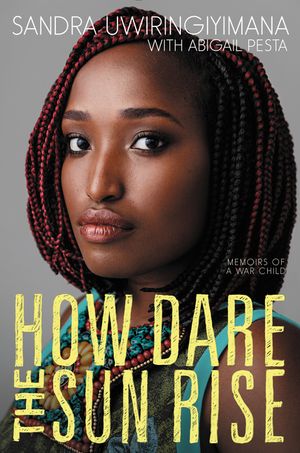 Sandra was just ten years old when she found herself with a gun pointed at her head. She had watched as rebels gunned down her mother and six-year-old sister in a refugee camp. Remarkably, the rebel didn’t pull the trigger, and Sandra escaped.
Thus began a new life for her and her surviving family members. With no home and no money, they struggled to stay alive. Eventually, through a United Nations refugee program, they moved to America, only to face yet another ethnic disconnect. Sandra may have crossed an ocean, but there was now a much wider divide she had to overcome. And it started with middle school in New York.
In this memoir, Sandra tells the story of her survival, of finding her place in a new country, of her hope for the future, and how she found a way to give voice to her people.
7. Hey, Kiddo by Jarrett J. Krosoczka
 In kindergarten, Jarrett Krosoczka’s teacher asks him to draw his family, with a mommy and a daddy. But Jarrett’s family is much more complicated than that. His mom is an addict, in and out of rehab, and in and out of Jarrett’s life. His father is a mystery — Jarrett doesn’t know where to find him, or even what his name is. Jarrett lives with his grandparents — two very loud, very loving, very opinionated people who had thought they were through with raising children until Jarrett came along.
Jarrett goes through his childhood trying to make his non-normal life as normal as possible, finding a way to express himself through drawing even as so little is being said to him about what’s going on. Only as a teenager can Jarrett begin to piece together the truth of his family, reckoning with his mother and tracking down his father.
Hey, Kiddo is a profoundly important memoir about growing up in a family grappling with addiction, and finding the art that helps you survive.
8. Everything I Learned About Racism I Learned in School by Tiffany Jewell
With a chorus of voices and stories from preschool through college, this incredible nonfiction work gives us a ton to talk about–from students’ rights to tracking to magnet schools. Check out the educators’ guide for some potential starting points!
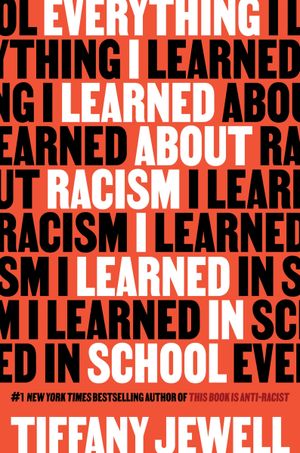 From preschool to higher education and everything in between, Everything I Learned About Racism I Learned in School focuses on the experiences Black and Brown students face as a direct result of the racism built into schools across the United States.
The overarching nonfiction narrative follows author Tiffany Jewell from early elementary school through her time at college, unpacking the history of systemic racism in the American educational system along the way. Throughout the book, other writers of the global majority share a wide variety of personal narratives and stories based on their own school experiences.
Contributors include New York Times bestseller Joanna Ho; award winners Minh Lê, Randy Ribay, and Torrey Maldonado; authors James Bird and Rebekah Borucki; author-educators Amelia A. Sherwood, Roberto Germán, Liz Kleinrock, Gary R. Gray Jr., Lorena Germán, Patrick Harris II, shea wesley martin, David Ryan Barcega Castro-Harris, Ozy Aloziem, Gayatri Sethi, and Dulce-Marie Flecha; and even a couple of teen writers!
Everything I Learned About Racism I Learned in School provides young folks with the context to think critically about and chart their own course through their current schooling—and any future schooling they may pursue.
9. Messy Roots: A Graphic Memoir of a Wuhanese American, written and illustrated by Laura Gao
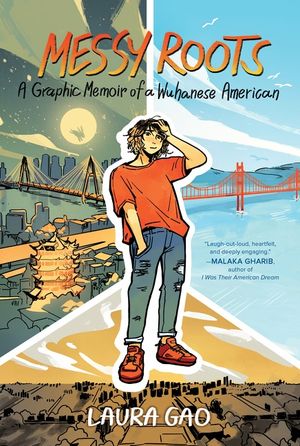
After spending her early years in Wuhan, China, riding water buffalos and devouring stinky tofu, Laura immigrates to Texas, where her hometown is as foreign as Mars—at least until 2020, when COVID-19 makes Wuhan a household name.
In Messy Roots, Laura illustrates her coming-of-age as the girl who simply wants to make the basketball team, escape Chinese school, and figure out why girls make her heart flutter.
Insightful, original, and hilarious, toggling seamlessly between past and present, China and America, Gao’s debut is a tour de force of graphic storytelling.
10. Homebody by Theo Parish
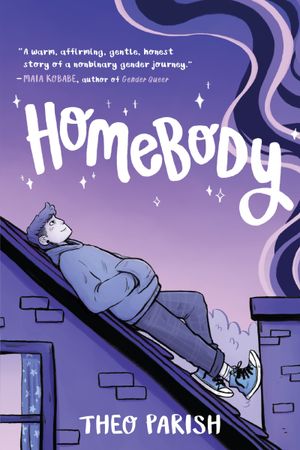 In their comics debut, Theo Parish masterfully weaves an intimate and defiantly hopeful memoir about the journey one nonbinary person takes to find a home within themself.
Combining traditional comics with organic journal-like interludes, Theo takes us through their experiences with the hundred arbitrary and unspoken gender binary rules of high school, from harrowing haircuts and finally the right haircut to the intersection of gender identity and sexuality—and through tiny everyday moments that all led up to Theo finding the term “nonbinary,” which finally struck a chord.
“Have you ever had one of those moments when all of a sudden things become clear…like someone just turned on a light?”
A whole spectrum of people will be drawn to Theo’s storytelling, from trans or questioning teens and adults, to folks who devoured Gender Queer by Maia Kobabe or The Fire Never Goes Out by ND Stevenson, to any person looking to dive a little deeper into the way gender can shape identity. Throughout the book, Theo’s crystal-clear voice reminds the reader that it’s okay not to know, it’s okay to change your mind, and it’s okay to take your time finding your way home.
“We are all just trying to find a place to call our own. We are all deserving of comfort and safety, a place to call home.”
11. In Limbo by Deb Jj Lee
 Ever since Deborah (Jung-Jin) Lee emigrated from South Korea to the United States, she’s felt her otherness.
For a while, her English wasn’t perfect. Her teachers can’t pronounce her Korean name. Her face and her eyes–especially her eyes–feel wrong.
In high school, everything gets harder. Friendships change and end, she falls behind in classes, and fights with her mom escalate. Caught in limbo, with nowhere safe to go, Deb finds her mental health plummeting, resulting in a suicide attempt.
But Deb is resilient and slowly heals with the help of art and self-care, guiding her to a deeper understanding of her heritage and herself.
12. #NotYourPrincess: Voices of Native American Women, edited by Lisa Charleyboy and Mary Beth Leatherdale
 On the flip side, #NotYourPrincess book features the powerful voices of Indigenous women across North America. It presents an eclectic collection of poems, essays, interviews, and art that combine to express the experience of being a Native American woman. Stories of abuse, humiliation, and stereotyping are countered by the voices of passionate women making themselves heard and demanding change.
Sometimes angry, often reflective, but always strong, the women in this book will give you insight into the lives of women who, for so long, have been virtually invisible.